
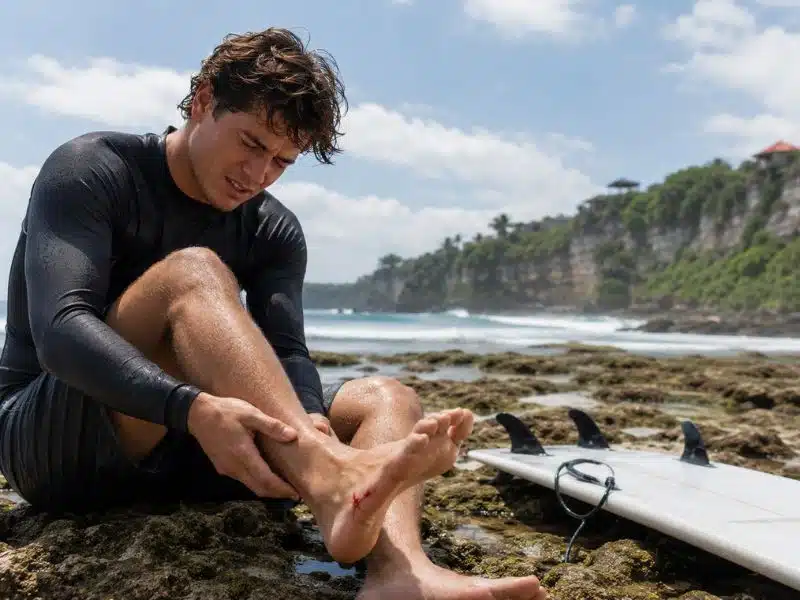
Bali is home to some of the best surf breaks in the world. From the hollow barrels of Uluwatu to the playful waves of Canggu, surfers of all levels come to the island to chase the perfect wave. But where there are great waves, there is often sharp coral underneath, and a coral cut is one of the most common injuries surfers face in Bali.
What makes coral cuts different from ordinary cuts is not just the depth or the pain. It is what gets left behind.
Why Coral Cuts Are More Serious Than They Look
When coral grazes or cuts the skin, it rarely leaves a clean wound. Coral is covered in living organisms, bacteria, and tiny fragments that embed into the skin on contact. This makes coral cuts significantly more prone to infection than cuts from other surfaces, especially in Bali’s warm tropical waters where bacterial growth is accelerated.
A wound that looks minor on the beach can become swollen, red, and infected within 24 to 48 hours if not treated properly. In some cases, coral fragments left inside the wound continue to cause inflammation long after the surface appears to have healed.
What to Do Immediately After a Coral Cut
Step 1: Get out of the water Saltwater contains bacteria, and continuing to surf with an open wound increases infection risk. Exit the water as soon as you safely can.
Step 2: Rinse thoroughly with clean water Flush the wound generously with clean fresh water or bottled water to remove as much debris and bacteria as possible. Do not use seawater or tap water from unknown sources.
Step 3: Remove visible coral fragments Using clean tweezers or the edge of a card, gently remove any visible pieces of coral from the wound. Do not probe deeply into the wound yourself as this can push debris further in or cause additional damage.
Step 4: Clean with antiseptic Apply an antiseptic solution such as povidone-iodine or chlorhexidine to disinfect the wound. These are widely available at pharmacies across Bali. Avoid using alcohol directly on deep wounds as it can damage tissue.
Step 5: Cover the wound Apply a clean, non-stick dressing and change it daily. Keep the wound as dry as possible between dressing changes, and avoid returning to the water until the wound has fully closed.
Signs of Infection to Watch For
In Bali’s tropical climate, infections develop faster than in cooler environments. Monitor the wound closely and seek medical attention if you notice any of the following:
- Increasing redness, warmth, or swelling around the wound
- Pus or unusual discharge
- The wound edges appear to be spreading or breaking down
- Fever or chills
- Red streaks extending from the wound site
- Pain that is worsening rather than improving after 48 hours
These signs indicate that bacteria have taken hold and the infection requires professional treatment, typically prescription antibiotics or wound debridement by a doctor.
When to See a Doctor
Not all coral cuts can be managed with basic first aid. See a doctor if the cut is deep, long, or has jagged edges that may need stitching, if you cannot remove coral fragments yourself, if signs of infection appear, if the wound is on the face, hands, or feet where healing is more complex, or if you have not had a tetanus vaccination in the past five years.
Tetanus is a genuine risk with any wound that involves foreign material, and a booster may be recommended depending on your vaccination history.
At Bali Medical Service, our doctors are experienced in treating surf-related injuries including coral cuts, wound debridement, infection management, and tetanus assessment. We offer clinic consultations as well as doctor home visits to your villa or hotel anywhere in Bali, so you can get proper care without interrupting your trip more than necessary.
How to Reduce the Risk of Coral Cuts While Surfing in Bali
Wearing reef booties provides meaningful protection when surfing over shallow reef breaks. Boardshorts and rashguards that cover more skin also reduce the surface area exposed to coral contact. Being aware of the reef position in the water, particularly during low tide when coral sits closer to the surface, helps you navigate more safely. When wiping out, try to protect your hands and feet as these are the areas most commonly in contact with the reef.
Conclusion
A coral cut in Bali is common, but it is not something to take lightly. The combination of sharp coral, warm tropical water, and embedded debris creates conditions where infections can escalate quickly. Treating the wound properly from the start, monitoring it closely, and seeking medical help when needed will make the difference between a minor inconvenience and a problem that cuts your surf trip short.
If you are unsure about a coral cut or any surf-related injury, Bali Medical Service is here to help.
📞 Contact Us
🏥 Website: www.balimedicalservice.com
📲 WhatsApp Hotline: +62 813 445 67891
📧 Email: canggu@balimedicalservice.com
🕒 Providing reliable medical care across Bali- Call Now